Illegal trafficking of snakes as exotic pets

Overview
Illegal wildlife trafficking is a billion-dollar industry with very negative impacts on biodiversity and the habitats of species. Animals are trafficked and traded legally and illegally for multiple purposes: food, medicine, outfits, decorative objects, pets, etc. Although the Convention on International Trade in Endangered Species of Wild Fauna and Flora (CITES) regulates and protects their trade, many exotic pets are on the Red List of the International Union for Conservation of Nature (IUCN).
This training course provides knowledge and tools about the different phases in which the international illegal trafficking of snakes as pets is perpetrated, from their capture from the wild in the country of origin (exporter country) to their illegal possession in the country of destination (importer country). It covers crime in the four main steps: illegal poaching and collecting, smuggling, commercialization, and illegal possession.
Illegal wildlife poisoning and other indiscriminate means of hunting
Overview
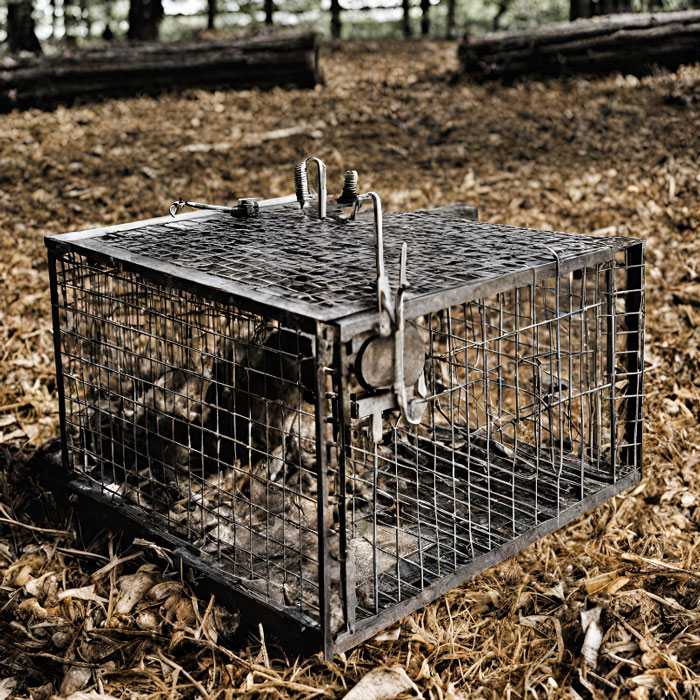
The use of poison baits in the wild, as well as other indiscriminate means of hunting, represents a serious and specific risk for wildlife, especially for the most threatened and endangered species and therefore for natural habitats. In addition, due to their swift transmission, the use of the chemicals poses a potential risk to the human food chain. Likewise, it is worth mentioning that the phenomenon is widespread in Europe, and it is not only exterminating endangered species but also jeopardizing reintroduction and conservation projects, which means a significant amount in terms of budget for European Union (EU) bodies and the administrations of the Member States.
This subject is covered through a comprehensive training course on procedures to prevent and investigate wildlife poisoning or the use of other indiscriminate means of hunting, in addition to other poaching events. Likewise, the focus strives on the coordination of the different preventive and investigative actions to be carried out with the public bodies involved in the protection of the environment to avoid this illicit activity.
Procedures to prevent and detect illegal activities related to the waste cycle

Overview
Exports of illicit waste trafficking, in particular to certain areas of the European continent, represent a lucrative business progressively increasing and responsive to rapidly changing market logic, and Waste Fires, as indicated at the beginning of this document, is everywhere one of the most dangerous consequences coming from the actual waste market crisis due to the interests of Environmental Crimes Organizations, which have well understood that it gives well opportunities to earn enormous profits by operating at under-market prices thanks to their illicit waste management.
The training course contributes to tackling waste trafficking in a 3-step operation: Criminal intelligence operation for collecting, processing, and analyzing the data on waste trade flows; procedures to conduct inspections on the targets; and further intelligence operation to identify the stream and related actors in order to know the role played by each actor (personal folder) and discover personal and company links.
Initiation in the investigation of crimes against the environment through the internet

Overview
Today, in the field of crime against the environment, it is not difficult to find that a criminal act is not limited to a space close to where the crime is located but involves several people or groups located on different continents that manage to move their merchandise through intercontinental transport, obtaining enormous benefits. Illegal profits are more frequently incardinated in money flows that mix legal and illegal origins, with money laundering mechanisms the same as those present in other types of crime. And, of course, it is not at all strange to find offers on the Internet related to protected animal or plant species, prohibited polluting substances, the sale of falsified CITES documents, etc.
The course covers investigations of environmental crimes that find on the Internet a way to extend their profits, causing global damage to the environment. The training analyzes different steps and tools for detecting evidence: equipment configuration, security, search techniques, management of information on the network and emails, search engines, and algorithms for searching for useful information on social networks, websites, and marketplaces.
Illegal trafficking of fluorinated gases
Overview
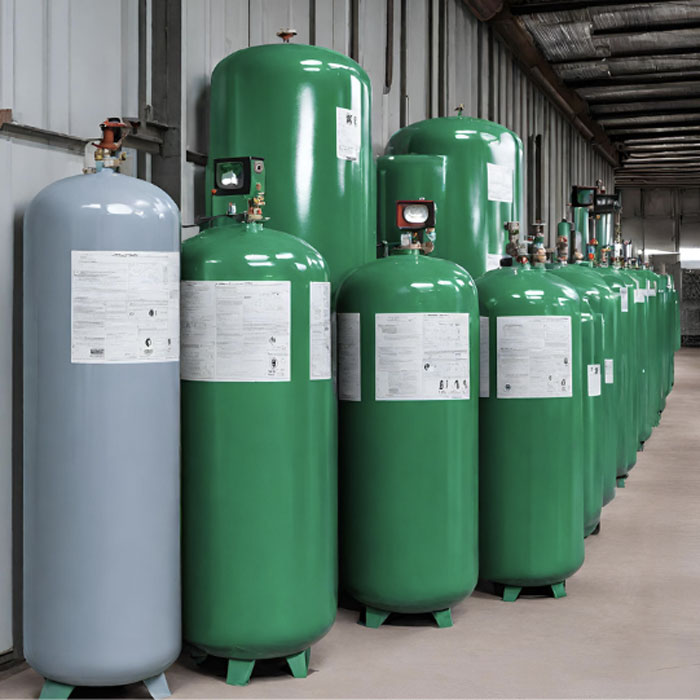
The black market associated with the illegal trafficking of refrigerant gases in Europe is a growing criminal phenomenon. The different restrictions and prohibitions introduced in recent years regarding the trade of this type of product, given their harmful effect on the environment, have led to the emergence of a lucrative black market made up of criminal networks that obtain considerable benefits at the cost of violating. European environmental policies, thereby undermining the Union’s environmental sustainability objectives.
As a result of the experience acquired by the European law enforcement agency, it has been possible to verify how criminals with criminal records in other criminal areas (drug and arms trafficking, among others) are now dedicated to the illicit trafficking of refrigerant gases, which occurs due to the few associated penalties as well as the lower risk of being discovered, together with the enormous economic benefits.
Forest fires
Overview
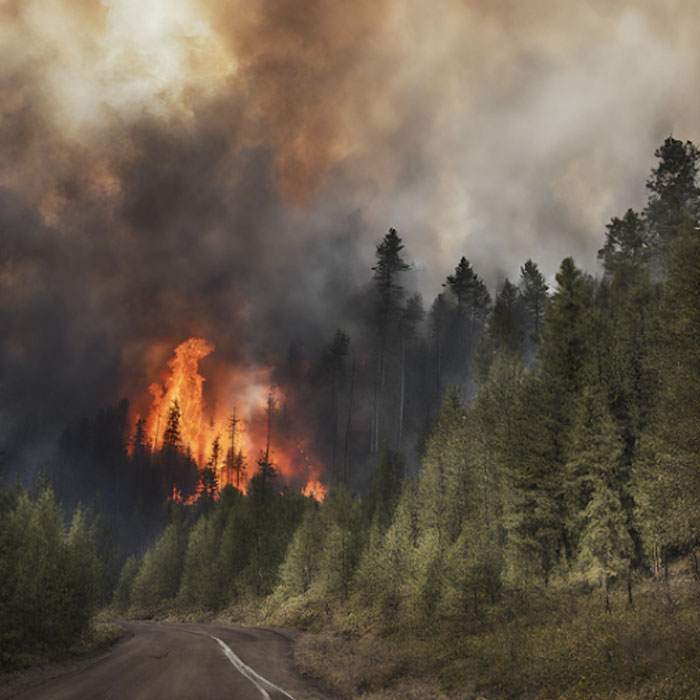
The investigation of forest fires is a fundamental tool for their prevention. The analysis of data from the last 15 years proves that most forest fires are linked to the human factor, derived from intentional acts, negligent behavior, or accidental circumstances, with the incidence of natural causes being very small. This is why the police investigation, from the moment the forest fire occurs, is key to the success of the fight against this criminal phenomenon.
We must not forget that the police investigation of forest fires allows the jurisdictional bodies to provide evidentiary elements to clarify the responsibilities derived from their authorship while at the same time deterring future criminal actions and, also, the negligent conduct of the rest of the citizens.
Protection of electrocution of avifauna

Overview
Every year, numerous episodes of bird deaths due to collisions or electrocution on power lines are recorded in Europe. Such is the case that this circumstance has currently become the main cause of mortality for some of the most important species classified as endangered.
The great demand for electrical energy entails a logical increase in lines and cables in the natural environment, a circumstance that must be made compatible with the conservation of the environment and, in this case, with the protection of birds from the risk of collision and electrocution in said structures.
At the European level, the Convention on the Conservation of Wildlife and the Natural Environment in Europe, made in Bern on September 19, 1979, and ratified on May 13, 1986, recognizes the need to adopt measures to carry out national policies for the conservation of wild flora and fauna and natural habitats, whose measures must be appropriate to protect, above all, threatened species.
In the same sense and specifically, the Convention on Migratory Species, or Bonn Convention, approved in September 2002, includes in Resolution 7.4, on Electrocution of Migratory Birds, a specific reference to the serious effects of electrocution on the avifauna and urges Member States, including Spain, to address the resolution of the problem.
The course aims to inform participants about the possible actions that must be carried out when inspecting high-voltage lines to verify compliance with the regulations on the protection of birds.
Illicit water extraction

Overview
The black market associated with the illegal trafficking of refrigerant gases in Europe is a Droughts, sometimes of natural origin and other times related to human activity, are gradually becoming an increasingly greater danger, potentially affecting a significant part of the world’s population, especially those who live in semi-arid regions and arid areas, as well as those in the process of desertification. The percentage of the planet affected by drought has more than doubled in the last 50 years, and in that same period, droughts have affected more people around the world.
As indicated by the Food and Agriculture Organization of the United Nations (FAO), the term “drought” is generally defined as a prolonged period (a season, a year, or several years) of deficient rainfall. comparison with the statistical average of precipitation compared to the multi-year average of a region, which causes a shortage of water for some activity, population group, or environmental sector.
On the other hand, most scientific studies on climate change refer to the Mediterranean region as a particularly vulnerable territory, which will make it one of the most affected areas in Europe in the future due to the increase in periods of drought (more intense) and a significant increase in temperature. Unstable seasonal patterns, rising temperatures, decreased rainfall, and lawless human action are factors that, combined, will lead to a greater risk of water shortages, heat waves, flash floods, forest fires, and coastal erosion. increasingly frequent.
The above circumstances suggest that serious episodes of drought will have serious consequences in the future for the socioeconomic sector and the environment, potentially causing famine and mass migration, the degradation of natural resources, and poor agricultural performance.
European police intelligence collected over the years has shown the proliferation of criminal networks specializing in the illicit collection and use of water, both surface and underground, specifically designed to obtain an undue economic benefit because of non-compliance with current water regulations. This is why, within the protection of the environment and natural resources, the control and prosecution of irregularities in the sustainable management of water resources are of vital importance.
Illegal wastewater discharge
Overview
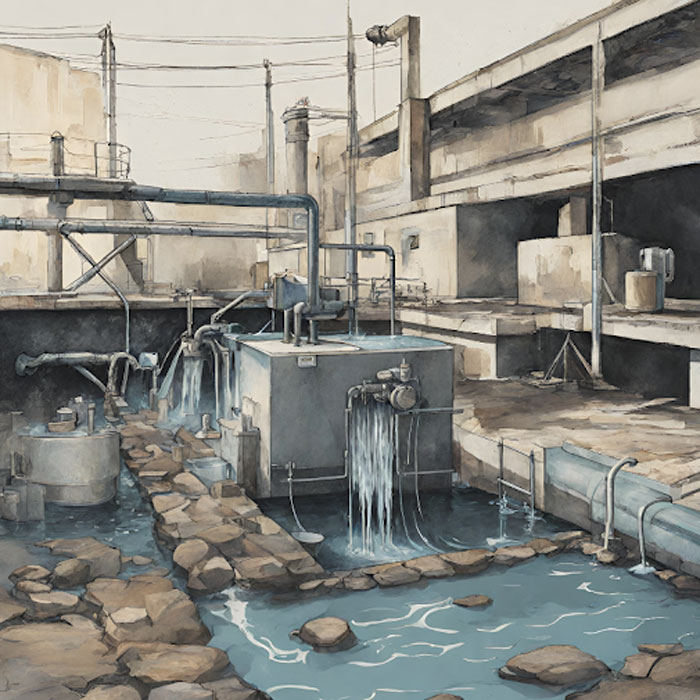
Pollution of water bodies constitutes a serious threat not only to the quality of the structure and functioning of aquatic ecosystems but also to the use of water itself.
Among other sources of pollution of water bodies are illegal discharges of wastewater, coming from both urban centers (urban wastewater) and the industrial and agricultural sectors (industrial wastewater). The lack of purification causes the polluting substances in wastewater to end up being dumped into rivers, lakes, seas, and the subsoil, causing serious damage to the environment. Wastewater must therefore be subjected to a purification process prior to discharge to guarantee the least possible impact on the receiving water mass.
In this context, this course provides a compendium of technical-legal knowledge necessary to effectively combat, both criminally and administratively, illegal wastewater discharges that are detected.
Phytosanitary products

Overview
The Food and Agriculture Organization of the United Nations (FAO) defines “pest” as any plant or animal species, race, biotype, or pathogenic agent harmful to plants or plant products. Pests cause a series of negative effects on agricultural production, which are not limited exclusively to economic effects due to loss of productivity or lower efficiency in crops. Inefficient pest control can lead to not only shortages of plant products for the population, with a consequent increase in market prices, but it can also have negative effects on agri-food security, nutrition, health, and the environment.
Although the phytosanitary products market is one of the most regulated in the world, its improper application can cause serious risks to public health and the environment, especially when it comes to substances that have been illegally introduced into the supply chain or are applied incorrectly. This is why, within the protection of the environment, natural resources, agri-food safety, and public health, the control and prosecution of irregularities in this area are of vital importance.
Poisons
Overview
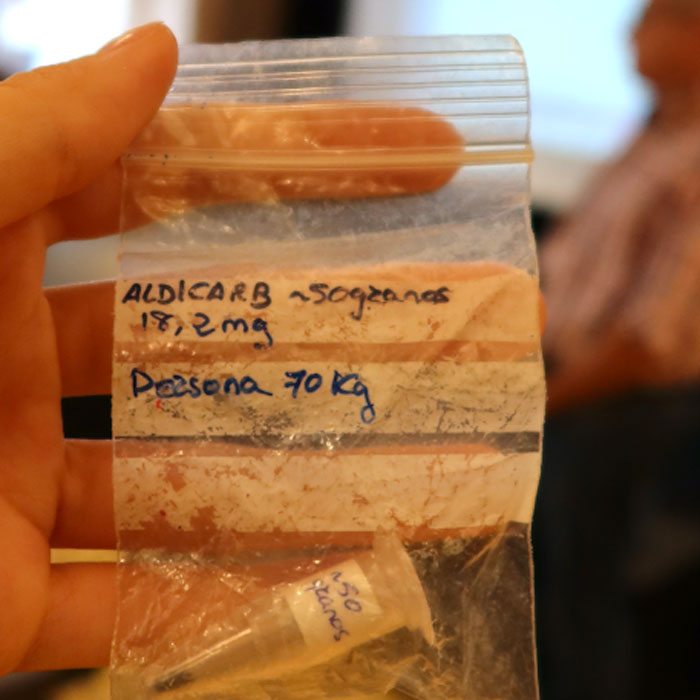
Today, the methodology in both prevention and investigation in cases of wildlife poisoning has evolved into a true specific environmental criminal investigation, as occurred in its day with forest fires. The different administrations have more and different means, which has forced them to adapt the actions of law enforcement agencies to a true multidisciplinary investigation.